


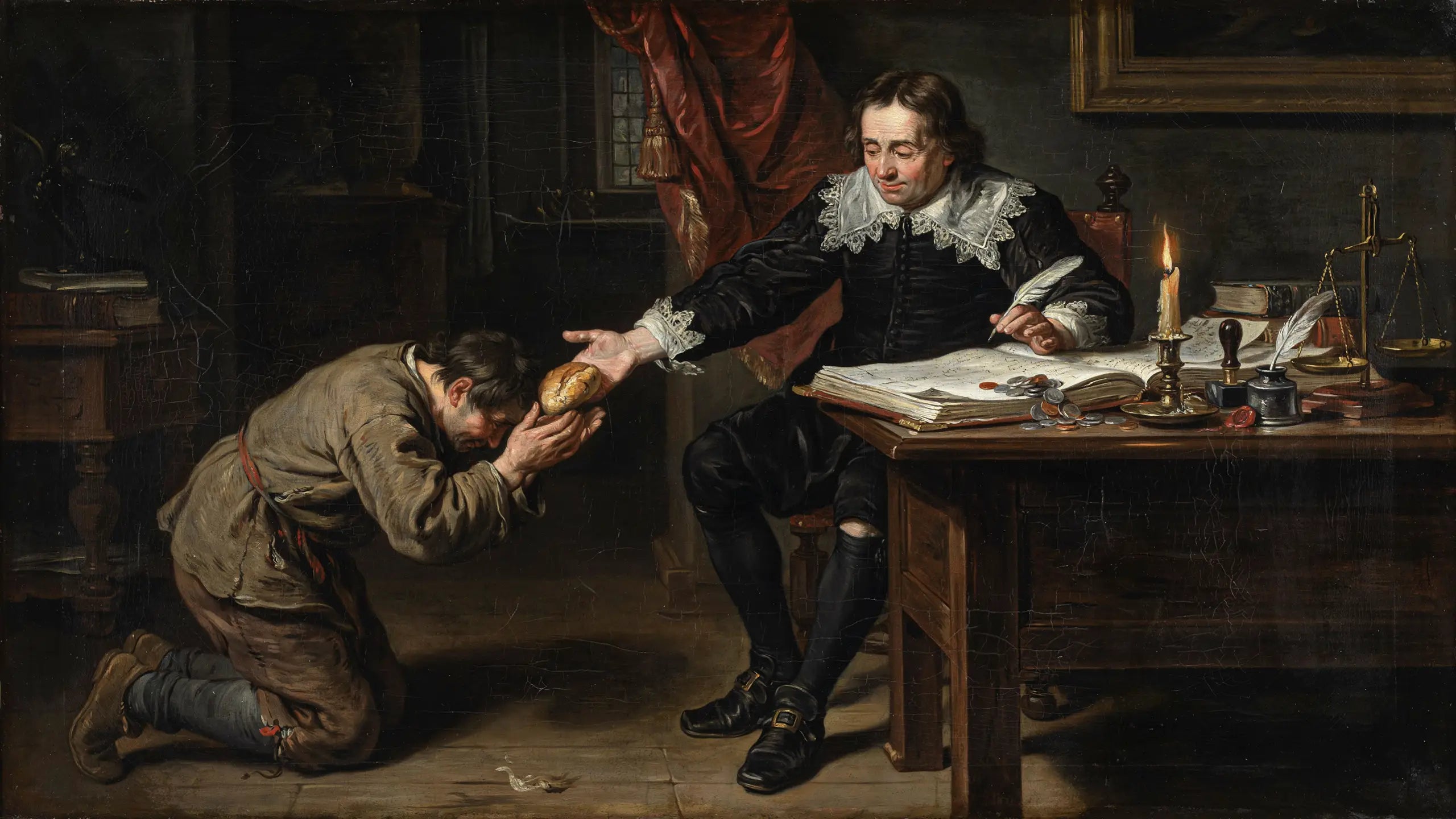
Quick answer: A covert narcissist is someone with the core traits of narcissism, including entitlement, a need for admiration, and low empathy, who conceals them behind shyness, humility, or victimhood. Instead of demanding the spotlight, covert narcissists control others through guilt, silent punishment, and carefully performed fragility.
The loud narcissist announces himself at the door. The covert narcissist is already inside the house, because you invited them in. They seemed so harmless.
A covert narcissist runs the same engine that drives every narcissist, grandiosity, entitlement, and thin empathy, but routes the exhaust through self-pity, false modesty, and moral one-upmanship. Where the overt narcissist demands applause, the covert narcissist harvests sympathy. Both are collecting the same crop: what clinicians call narcissistic supply, the external validation that props up a self that cannot stand on its own.
The clinical scaffolding matters here. Narcissistic personality disorder is defined by nine DSM-5 criteria, of which at least five must be present for a diagnosis, and research estimates suggest between 0.5% and 5% of people in the U.S. may have it. Covert narcissism describes a presentation of those traits. The DSM lists no separate covert diagnosis. Plenty of people show covert narcissistic patterns without ever meeting the full clinical bar, and they can still do you real damage. If you want the foundation first, start with what a narcissist is and come back.
I gave narcissism its own chapter in The Black Book of Power, Chapter 20, The Lonely Dictator, and my verdict there was blunt: "Narcissism is inefficient. Unsustainable. A power structure that consumes itself." The covert narcissist operates the same extraction system as the loud one. The machinery is simply installed behind the drywall, which is why it can run for years before anyone names the noise.
That hiddenness is the whole game. Power you can see, you can resist. Power that presents itself as weakness gets waved past every defense you own.
The difference is packaging, and packaging only; the core pattern of entitlement, low empathy, and hunger for validation is shared. Researchers describe two broad expressions of the trait, grandiose and vulnerable. In a foundational study in the Journal of Personality Disorders, Dickinson and Pincus found that grandiose narcissists denied interpersonal distress and reported secure, self-flattering attachment styles, while vulnerable narcissists reported high distress, cold and avoidant interpersonal problems, and fearful attachment. The covert narcissist suffers, and the suffering is real. It is also load-bearing: it does the work that swagger does for the grandiose type.
| Dimension | Overt (grandiose) narcissist | Covert (vulnerable) narcissist |
|---|---|---|
| Self-importance | Announced openly: bragging, name-dropping, dominance | Implied: false modesty, martyrdom, hidden-genius hints |
| Reaction to criticism | Rage, retaliation, public counterattack | Wounded withdrawal, sulking, delayed revenge |
| How they extract supply | Applause, status, admiration | Sympathy, reassurance, indebtedness |
| Social reputation | "Arrogant, but confident" | "Sensitive, selfless, misunderstood" |
| Aggression style | Direct and visible | Passive and deniable |
| Reported distress | Low; they claim to feel great | High anxiety, envy, and resentment |
One more boundary line. A covert narcissist wounds you to regulate their own self-esteem; a predator without that need is a different animal, and how narcissists differ from sociopaths deserves its own map.
You will rarely catch a covert narcissist in one damning act. You catch them in patterns. Here are the twelve that matter, with what each looks like at close range.
They believe the room is beneath them and say none of it aloud. Watch the faint smile when a colleague announces a promotion, the sigh when someone else holds the floor. The contempt leaks through posture, never speeches.
Every job was lost to politics, every friendship ended because people were jealous, every ex was crazy. In their entire history, they have never once been the offender. A life story with no self-authored mistakes is fiction, and fiction requires an author.
You mention the dishes and lose the weekend to wounded silence. Feedback lands as annihilation because the self-esteem underneath is brittle, and your smallest observation threatens the whole structure.
They punish without fingerprints: the forgotten errand, the reply that takes three days, the "joke" that lands precisely on your softest spot. Confront any of it and you become the aggressor.
The self-deprecation is bait. "I'm terrible at this" exists to harvest reassurance, and if you ever agree with it, you will pay for weeks.
Your good news gets a flat "must be nice," followed by a headache that ends the dinner. They diminish what they cannot have and expect you to envy them in return.
Affection, praise, and basic acknowledgment are rationed to keep you reaching. The drought makes the rain feel like a miracle, which is the point.
They keep a ledger of martyrdom: every sacrifice logged, indexed, and produced the moment you assert a need. "After everything I've done for you" is the invoice.
In public they are the most caring person in the room, the first to volunteer, the last to leave the grieving friend. In private, your tears are an inconvenience they endure with visible effort.
Your reasonable request becomes an attack on their wellbeing. You raise a boundary; they raise their suffering; you end up apologizing for the thing you needed.
Privately they are an unrecognized genius surrounded by inferiors who got lucky. Fantasies of success, brilliance, and ideal love sit among the DSM's own criteria; in the covert type the fantasy does the work that applause would.
Unrequested favors arrive, then convert to obligations without notice. The gift was never free; it was a lien on your future compliance.
The covert narcissist checklist. Count what you recognize, sustained across months and settings: hidden superiority, chronic victimhood, collapse under mild feedback, punishment without fingerprints, compliment-fishing modesty, resentment of your wins, rationed warmth, guilt ledgers, public empathy with private coldness, fragility that flips blame, hidden-genius fantasies, gifts that become debts. Several of these, held over time, form a pattern worth taking seriously. Patterns are evidence.
The twelve signs above are the covert dialect. For the full base vocabulary, overt and covert alike, see the 12 traits of a narcissist.
Because it works, and because it defends something fragile. Underneath the pattern sits a self-image that cannot survive contact with ordinary reality, so reality gets managed: criticism deflected, admiration extracted, failure outsourced to villains. Clinical literature describes narcissistic personality disorder as a pervasive pattern of grandiosity, need for admiration, and lack of empathy that holds across situations and years. The covert version bends the delivery, never the need.
In Chapter 7 of the book, The Strings of the Heart, I mapped the ten hungers that drive human behavior. The covert narcissist is starved on three at once: validation, status, and control. Every tactic on the list above is a feeding strategy for one of those three, and once you see the hunger behind the tactic, the tactic stops being confusing.
Their most addictive tool is one I dissected in Chapter 3, The Contract: intermittent reinforcement. Unpredictable rewards create stronger attachment than reliable kindness ever could; warmth that arrives on a broken schedule turns a partner into a gambler at a slot machine. Run long enough, that cycle produces trauma bonding, where the relief of being un-punished starts to feel indistinguishable from love.
Are they doing it on purpose? Partially. Some moves are calculated; much of it is reflexive shame-management rehearsed since childhood, and people running these patterns often have startlingly little insight into them. For your purposes the distinction is minor. A pattern that harms you justifies defenses whether it was engineered or inherited.
The pattern wears different uniforms in different rooms. The engine never changes.
The cycle I documented in Chapter 20 runs in four beats: idealize, devalue, discard, hoover. The covert version plays it in a minor key. Idealization arrives as soulmate-grade attentiveness. Devaluation arrives as disappointment: sighs, comparisons, the growing sense that you keep failing a test nobody will show you. The discard is often engineered so that you leave, preserving their victimhood. Then the hoover: the late-night message about how much they've changed. If you carry people-pleasing patterns, understand that you are this cycle's preferred fuel: you supply endlessly and apologize for the cost.
Diagnosed narcissism skews male; the Cleveland Clinic reports that 50% to 75% of NPD cases affect males. Covert presentation is where the stereotype breaks down. It thrives inside roles our culture reads as feminine virtue: the selfless mother who keeps receipts, the friend whose sacrifices must be narrated, the wife whose suffering is a permanent group project. Vulnerability-related symptoms are also less likely to attract clinical attention in the first place, so covert patterns in women are routinely misread as devotion, sensitivity, or anxiety.
A covert narcissist parent issues love as a loan. The child inherits the ledger: achievements belong to the parent, failures to the child, and guilt is the house currency. Adult children of such parents often describe the same eerie symptom, a conscience that sounds suspiciously like someone else's voice.
Look for the colleague who undermines with concern ("I just worry you've taken on too much"), the manager with a humble manner and a monopoly on credit, the veteran who plays martyr while blocking every process they don't control. Covert narcissists rarely seize the org chart. They colonize its bloodstream.
Through your empathy, which they treat as an unlocked door. The toolkit is consistent enough to memorize.
Gaslighting with deniability. "I never said that. You've been so sensitive lately." Your memory becomes negotiable, and every negotiation favors them.
Preemptive victimhood. They get their retaliation in first by being hurt before you can be. Whatever you were about to raise is now an act of cruelty against a wounded person.
The silent treatment. In Chapter 8, The Bonding of Souls, I described the three laws of psychological fusion: synchronization, intensity, and isolation. Withdrawal weaponizes all three at once. It isolates you inside the relationship, spikes emotional intensity, then rewards your surrender with reunion. The lesson your nervous system learns is obedience.
Guilt and weaponized incompetence. The ledger extracts compliance; the performed helplessness extracts labor. Somehow you are now doing the thing, and grateful for the chance.
The unfinished conversation. Arguments end without resolution on purpose. The Zeigarnik effect, the mind's fixation on incomplete loops, keeps them occupying your head rent-free for days.
Desire installation. In Chapter 7 I laid out the four-phase sequence manipulators use to manufacture craving: find the bleeding, salt the wound, paint the promised land, monopolize the bridge. The covert narcissist runs it instinctively. They locate your insecurity, aggravate it, position their approval as the cure, then make themselves the only supplier.
The endgame is colonization. Their criticism keeps running in your own head when they are nowhere in the room, in your own voice. In the book I call that installed voice the Parasite, and evicting it is a separate project from evicting the person.
Stop feeding the mechanism, and start protecting the parts of you it eats. In order:
Run the Master Question. From Chapter 2, Masters of Reality: "What am I being made to feel, and why now?" Guilt that arrives on schedule is data. Once you ask the question, the performance loses its invisibility, and covert tactics die in daylight.
Become the Marble Statue. In Chapter 4 I wrote: "True empathy requires complete emotional sovereignty. To genuinely understand another, you must remain uncolonized by their feelings. To see them clearly, you cannot become them." The popular gray-rock method, going flat, brief, and unrewarding, is a crude version of this. The Marble Statue keeps something gray rock loses: you still see everything. You simply stop bleeding for it.
Set boundaries you can enforce alone. A boundary is a decision about your own behavior, never a request for theirs. "If the silent treatment starts, I'll be at my sister's" requires no cooperation. Announce less. Enforce more.
Document. Keep dated notes of agreements and incidents. Gaslighting requires your memory to be negotiable; a written record ends the negotiation.
Starve the ledger. Decline the guilt accounting without litigating it. "You may be right" ends more ambushes than any proof will. If you must operate near one long-term, Chapter 20's Black Mirror technique, reflecting their own mythology back to steer them, can buy safety in negotiations and exits. Handle it like the weapon it is; the same chapter explains what wielding it costs.
Exit when the pattern escalates. Where there is abuse, escalation, or a hoover after every discard, distance beats strategy, up to and including no contact. You owe no one your slow disappearance.
There are longer entries on each of these moves in the Basics of Psychology library, and if you want to test the book's approach before committing, you can read the first chapter free. For the offensive playbook, including when turning their machinery against them is worth it, see turn the tables on a narcissist.
The covert playbook above is specialized. For the complete defensive system that covers every variety, work through how to deal with a narcissist next.
Sometimes, modestly, and only when they want to. Patterns this old are load-bearing walls; nobody demolishes one because you asked nicely. Clinical reviews describe treatment options for narcissistic personality disorder as limited in both availability and efficacy, though sustained psychotherapy helps some people who genuinely commit to it. The honest summary: motivated covert narcissists exist, and waiting for one to materialize inside your marriage is a poor retirement plan. Their change is their job. Your sovereignty is yours.
In Part II of the book I tell the story of Rebecca, who escaped a 20-year narcissistic marriage and then, to everyone's confusion, fell apart. The clinical name is identity diffusion: an identity built in opposition to a controlling person dies with the opposition. If you leave a covert narcissist and feel like soup, you are on schedule. The dissolution means the reconstruction can finally begin, this time by your own hand.
That reconstruction is the actual subject of everything I write. Covert narcissism is one instance of a much larger category: hidden power, exercised on people who were never taught to see it. Stan Taylor's The Black Book of Power exists to make you the kind of person these tactics no longer work on, by teaching you the machinery from the inside. Sovereignty is a skill. Skills can be trained.
This vocabulary exists for protection, and it degrades into a weapon with remarkable speed. A person can be hurt, depressed, or badly raised without being a covert narcissist, and you carry hungers of your own; every tactic in this article works because the person on the receiving end is human, which includes you. Let the exam face both directions. In the book I put the stakes plainly: "You are whoever you practice being until the practice becomes you." Practice being someone who cannot be harvested.
FAQ
A covert narcissist is a person with narcissistic traits, including entitlement, a need for admiration, and low empathy, who expresses them through victimhood, false modesty, and passive aggression instead of open grandiosity. Researchers call this presentation vulnerable narcissism; the DSM lists no separate covert diagnosis.
Look for sustained patterns: chronic victimhood, wounded collapse at mild feedback, punishment by withdrawal, compliment-fishing modesty, guilt ledgers, and envy of your success. One incident proves nothing. The same pattern across months and settings is the signal.
Awareness varies. Many tactics are reflexive defenses of fragile self-esteem, and people with narcissistic patterns often have limited insight into them, while some behaviors, like timed withdrawal or guilt campaigns, are deliberate. Either way, a pattern that harms you justifies boundaries.
Almost none. Vulnerable narcissism is the research term and covert narcissist is the popular one; both describe narcissism expressed through hypersensitivity, withdrawal, hidden superiority, and passive aggression.
Change is possible with long-term psychotherapy and genuine motivation, and both are uncommon. You cannot force it, and staying in harm's way to fund someone's hypothetical growth is a bad trade. Their change is their job; your sovereignty is yours.
Chapter 20, "The Lonely Dictator," treats narcissism as a power structure that consumes its own supports, including the covert playbook: the idealize, devalue, discard, hoover cycle and the "Black Mirror" counter-technique. The Black Book of Power is available only at stantaylor.com.

The Black Book of Power


Conversational Narcissism: The Cannibal at the Table
Why you keep consuming the people in front of you to fill a hole dug in childhood.

A Lesson in Power Dynamics at Work
See how getting good at your job switches off the brain circuit that reads power.
The Fawn Response: An Education in Disappearing for Others
Why does being useful feels like the surest way to be loved?

The Know-It-All Personality: Why the 'Smartest' Person Builds Nothing
Why does the 'smartest' person in the room tend to build nothing?
Therapy Dependency: When Therapy Needs You to Stay Broken
In reading this, you will meet the one product the industry cannot afford to cure: the perpetual patient.

Threshold Addiction: The Dopamine of "Almost"
Why does planning feel better than doing?
Am I the Toxic One? An Honest Diagnostic
Close the wound or bleed to death believing your emotional hemorrhaging is holy.
How To Manipulate a Narcissist
Why does this person make me feel like I'm losing my mind?
The Covert Narcissist: How to Recognize the Hidden Predator
The covert narcissist is dangerous precisely because the disguise is weakness.

Self-Sabotage: Why You Do It and How to Kill the Pattern
You don't lack discipline. You're running a program that trades your future for a small, guaranteed hit of safety.

10 Signs of Manipulation (and the Counter for Each)
The ten tells a professional manipulator hopes you never learn, and the counter for each.
Dark Psychology: The Complete Guide (From Someone Who Used It)
What dark psychology actually is, from someone who ran the machinery for 23 years.

How to Deal With a Narcissist Without Losing Yourself
You cannot change a narcissist. You can become the person their tactics no longer work on.

The 9 Best Dark Psychology Books, Ranked by Someone Who Lived It
Nine dark psychology books ranked by someone who ran the plays for 23 years, and what each one will not tell you.
What Is a Dark Empath? Traits, Signs, and the Real Danger
The dark empath is dangerous precisely because empathy was supposed to be the safety feature.

The 12 Traits of a Narcissist and What They Reveal
Twelve traits, one mission: defending a self-image that must never be questioned.