



Quick answer: Sociopaths and narcissists are both Cluster B personalities—entitled, exploitative, and lacking empathy—but their motivations differ. The narcissist is internally focused: everything serves a grandiose self-image that demands admiration. The sociopath is externally focused: using and violating others without restraint or remorse. One needs your applause; the other simply needs your utility.
Modern psychological frameworks group sociopaths and narcissists into a category called Cluster B. Both difficult personalities, the category cluster B recognizes them as having shared features such as emotional volatility and chaotic interpersonal relationships.
The official DSM-5 diagnostic criteria maintain a strict separation between sociopaths and narcissists by highlighting an essential divergence in purpose.
The concept of narcissism originates from the Greek myth of Narcissus, before later being defined as a psychological condition by Sigmund Freud. Freud led to the definition symbolizing a person whose psychic energy, or libido, is invested primarily in the ego.
Narcissistic personality disorder (NPD) is a pathology of self-regard. It's the desperate and relentless maintenance of a grandiose internal self-image.
Sociopathy became prominent in American psychology around the 1930s before the American Psychiatric Association changed the terminology to "sociopathic personality disturbance" in 1952. That eventually evolved into Antisocial Personality Disorder (ASPD), defined by a persistent and pervasive disregard for and violation of the rights of others.
This distinction sets the two apart. The narcissist is internally focused on being superior, and the sociopath is externally focused on using others without restraint.
There are core similarities despite their distinct foundational pathologies. The two conditions share traits that make them almost indistinguishable. The sociopath and the narcissist possess an inflated sense of self-importance and operate with a core sense of entitlement. They both use deceit and manipulation to their advantage, and they both are capable of inflicting profound interpersonal harm.
This shared pathology of exploitation stems from a profound lack of empathy.
That said, even these similarities are complex. The lack of empathy in a typical narcissist is primarily self-centered and limited. They can relate to another's feelings only if those feelings reflect their own status or vulnerability. There's a total lack of empathy in the sociopath or psychopath that's far more unnerving.
It is often a fundamental, affective coldness and an absence of emotional connection that makes their manipulation feel calculated instead of reactive.
Analyzing their core motivations is the most decisive way to differentiate between these personality profiles.
When you feel disoriented in a manipulative interaction, you can ask what the individual is truly trying to achieve.
You'll notice that for the narcissist, the primary driver is the acquisition of admiration and external validation. This is often referred to as narcissistic supply. Maintaining their self-esteem is a behavior that is inherently vulnerable and fluctuating. They will manipulate and lash out strategically to achieve a higher status.
Perhaps more crucially, they're doing it to avoid the anticipated shame or defeat that would shatter their underlying fragile self-image. It's a constant cycle of being driven by need and fear. The narcissist also comes in a hidden model; covert narcissist traits run the same engine behind victimhood and false modesty.
The sociopath is far different. They often operate within the parameters of ASPD but are driven by a simpler, more immediate imperative: the more destructive and impulsive desire for gratification and material gain. They don't require or necessarily care about the status or admiration like a narcissist does. Their manipulation is typically a calculated lie to achieve tangible, instrumental goals, such as:
Money
Quick power grabs
Escaping legal consequences
If a narcissist is deceitful, the motive is usually protective in the hope of preserving their image. If a sociopath does that, the objective is purely opportunistic. They're looking for the easiest, quickest path to the desired end-goal with a fundamental lack of moral constraint.
There's a developmental element essential to this divergence in function. The diagnosis of ASPD has a mandatory requirement. There must be a history of persistent and serious childhood behavior problems, known clinically as Conduct Disorder (CD), occurring before age 15. With that, the sociopath represents a failure of moral acquisition. They've clearly exhibited a pervasive inability to follow social norms for many years.
NPD is explicitly not typically associated with this history of CD. When recognizing psychological vulnerabilities, a foundational step detailed in The Black Book of Power, understanding whether you are managing vulnerability to shame (NPD) or fundamental amorality (ASPD) is essential.
Perhaps the most profound distinction is the presence or absence of an internal moral structure.
A person with NPD typically still possesses a conscience, although many people in close personal relationships with someone with NPD might think differently. The issue is that, yes, it's there, but it's hidden by the innate desire to follow self-interest.
And a person with NPD does fail. When they do, their pain is experienced primarily as shame or defeat linked to the exposure or deflation of their grand self-image. The existence of shame means there's an ability to connect, however strained, to societal rules and the opinions of others.
The antisocial individual's moral structure, however, is deeply impaired. Sociopaths can exhibit weak or inconsistent feelings of guilt. I will say that it's sometimes only in relation to a few close individuals.
The more extreme variant, the psychopath, is marked by an absent conscience, completely lacking the capacity for true guilt or remorse, whoever that's being aimed toward. It doesn't matter if it is a close relationship or a random person on the street.
When a sociopath is caught, they will never acknowledge it as a tactical failure. Admitting moral error is something they will simply never do in the context of a true sociopath diagnosis.
This difference, shame versus pure strategic failure, is what separates a pathology centered on ego maintenance from a pervasive pathology of moral failure.
The Psychopathic traits mediate guilt‑related anterior midcingulate activation in a virtual obedience paradigm study, 2022, used a virtual obedience paradigm during fMRI scanning and found that psychopathic traits modulate behavioural and neural responses associated with guilt.
Participants were asked to carry out morally relevant actions (via button pressing) under direct orders. Their self-reported guilt feelings and brain activation in regions such as the anterior midcingulate cortex (aMCC) were measured.
Higher psychopathic traits were associated with weaker guilt ratings for harming actions and reduced aMCC activation when anticipating or experiencing guilt. The authors interpret this as evidence that individuals high in psychopathic traits show an impaired neural response to guilt-eliciting stimuli.
Another empirical study correlating the “overt” form of narcissism with shame- and guilt-proneness in a non-clinical sample of Italian university students. In this study of 165 students, researchers measured narcissistic traits using the Narcissistic Personality Inventory (NPI) and shame/guilt-proneness using the Shame-Guilt Proneness Scale. They found that higher narcissism scores correlated negatively with shame-proneness and with certain guilt subscales (e.g., self-blame for actions).
The overt narcissism component thus appears linked with a lower tendency to feel shame or guilt. The authors suggest that narcissistic individuals may eschew typical moral self-evaluations (shame/guilt) or have altered emotional responses to moral failures.
Contemporary neurobiological research provides the most definitive and granular distinction.
It highlights that these two conditions are different in the way their brains process self-referential thought and moral constraint. Imaging studies typically focus on the interaction between the three major neural networks:
The Default Mode Network (DMN)
The Salience Network (SN)
The Fronto-Parietal Network (FPN)
The Default Mode Network (DMN) is the system responsible for self-reflection, planning, and introspection. It shows an inverted profile between the two groups.
Narcissistic traits are positively associated with specific hubs of the DMN, especially the Medial Prefrontal Cortex (MPFC). This indicates a pathological hyper-focus on self-status and self-referential thinking. Within psychology, it directly validates the Freudian insight that NPD is an excessive investment of attention into the self.
The DMN hubs are completely different. They're negatively associated with antisocial traits. Interestingly, that suggests reduced internal focus and diminished self-referential thought in the sociopath. The sociopath's brain connectivity often links instead to external, sensory processing areas. It's like a neural confirmation of their opportunistic focus.
Still, both conditions demonstrate superior manipulative ability, as evidenced by a functional convergence. The Lateral Prefrontal Cortex (LPFC) of the Fronto-Parietal Network (FPN), responsible for controlling strategic planning and cognitive control, is a shared positive predictor for both narcissistic and antisocial traits.
So, yes, they both possess augmented strategic thinking, which they use to manipulate others and achieve personal goals.
Yes, there's definitely an overlap. The most destructive personality type is the product of this convergence.
Grandiose malignant narcissism is the concept for a severe phenotype that links the two disorders. Someone falling into this category merges the status-seeking focus of NPD with the affective coldness and moral immunity of the sociopath. It's defined by exaggerated self-importance, relentless pursuit of interpersonal power and control, and most essentially, a complete lack of remorse.
It's, by far, one of the worst and most dangerous subcategories of personality types.
This is the individual who understands how to exploit cognitive pitfalls, as I explained in The Black Book of Power. They're not doing it out of reactive rage, but, and it's more deadly, with the cold, strategic intent of a master manipulator. It's gaslighting taken to a new level. A level of calculated psychological warfare that combines the self-serving narrative of the narcissist with the amoral freedom of the sociopath.
The underlying structural pathology is why intervention is so difficult, dare I say, impossible.
Psychopathy and antisociality are linked to widespread gray matter (GM) reductions in moral and emotional processing regions of the brain. Imaging studies have confirmed this. That includes the Orbitofrontal Cortex (OFC) and the Anterior Cingulate Cortex (ACC). These are the regions responsible for integrating emotion with ethical behavior and predicting consequences.
You cannot therapize a compromised structure. It's impossible. ASPD is, therefore, a powerful predictor of poor treatment response. It makes the malignant narcissist profoundly resilient to change.
There's a practical difference between a sociopath and a narcissist. It is the difference between an exposed wound and an executed contract. The aim is tactical recognition rather than clinical diagnosis and intervention.
The narcissist is driven by the perpetual fear of a public collapse of their grand self-image. That would inherently make them susceptible to shame avoidance and a loss of status. If you can identify this vulnerability, you can understand how to manage and maintain your distance without creating a rage escalation. If the narcissist column matches your situation, the strategies for dealing with a narcissist cover the exposure-management playbook.
The sociopath is driven purely by instrumental goals. Because they lack remorse or true guilt, exposing their crimes or failures does not deter them. That will only make you a tactical target. Their focus on external, opportunistic gain is a pattern of persistent and recurrent dishonesty. I would go as far as to say that prolonged, close engagement is disastrous.
You must stop looking for a human connection where only extraction is possible.
The most potent defense against either personality is not confrontation. It's the mastery of self-control. You should create a block of psychological invulnerability that makes their manipulations ineffective. This involves creating boundaries that cannot be breached by either the narcissist's need for supply or the sociopath's need for immediate exploitation.
Start by assessing your own susceptibility. Do you think you are drawn to grandiosity? Do you over-explain your pain and hope for the validation they cannot provide? Determining your own baseline for vulnerabilities and the power dynamics controlling your relationships is essential.
If you can move beyond mere identification and establish psychological invulnerability, I recommend first understanding which shadow power dynamics control your interactions.
You've unknowingly signed a contract and created a deal to trade your potential for comfort for their desire for power.
The clinical reality is complex, with high comorbidity between ASPD and NPD. That's especially true of the most destructive individuals. You can leave the diagnosis to clinicians. Your job is recognition, and more importantly, self-examination. The true danger is in the psychological contract you signed to accept their influence.
The lessons about The Lonely Dictator confirm that even people who can master control of influence risk succumbing to narcissism.
Use this knowledge as a design for your own sovereignty. The ultimate difference is that the narcissist needs you to reflect their light, and the sociopath uses you as fuel. Both are masters of the mask, but you are the conscious manipulator of your own soul.
FAQ
Both sit in the DSM-5’s Cluster B, but they run on different fuel. The narcissist is building and defending a grandiose self-image, so he needs your admiration. The sociopath has no image to protect and no guilt to manage, so he needs your utility. One exploits you for applause. The other exploits you because you were there.
The narcissist is more volatile — threaten the self-image and you get rage. The sociopath is more dangerous, because he is harder to detect: no craving for validation, no visible wound to read. Narcissists hurt you when their ego is threatened. Sociopaths hurt you whenever it pays, calmly, without needing a cover story for themselves.
Rarely, and never because you loved them harder. Both structures are self-protecting: the narcissist can’t tolerate the shame that real change requires, and the sociopath has no internal motive to start. Treatment outcomes are poor for both. The practical move is to stop managing their potential and start managing your exposure.
Yes. The traits overlap, and the combination — grandiosity plus remorseless exploitation — is what clinicians call malignant narcissism. Brain research points the same way: narcissism shows hyperactivity in self-referential networks while antisocial traits show the opposite pattern, and some people carry both signatures. It is the most destructive profile in Cluster B.
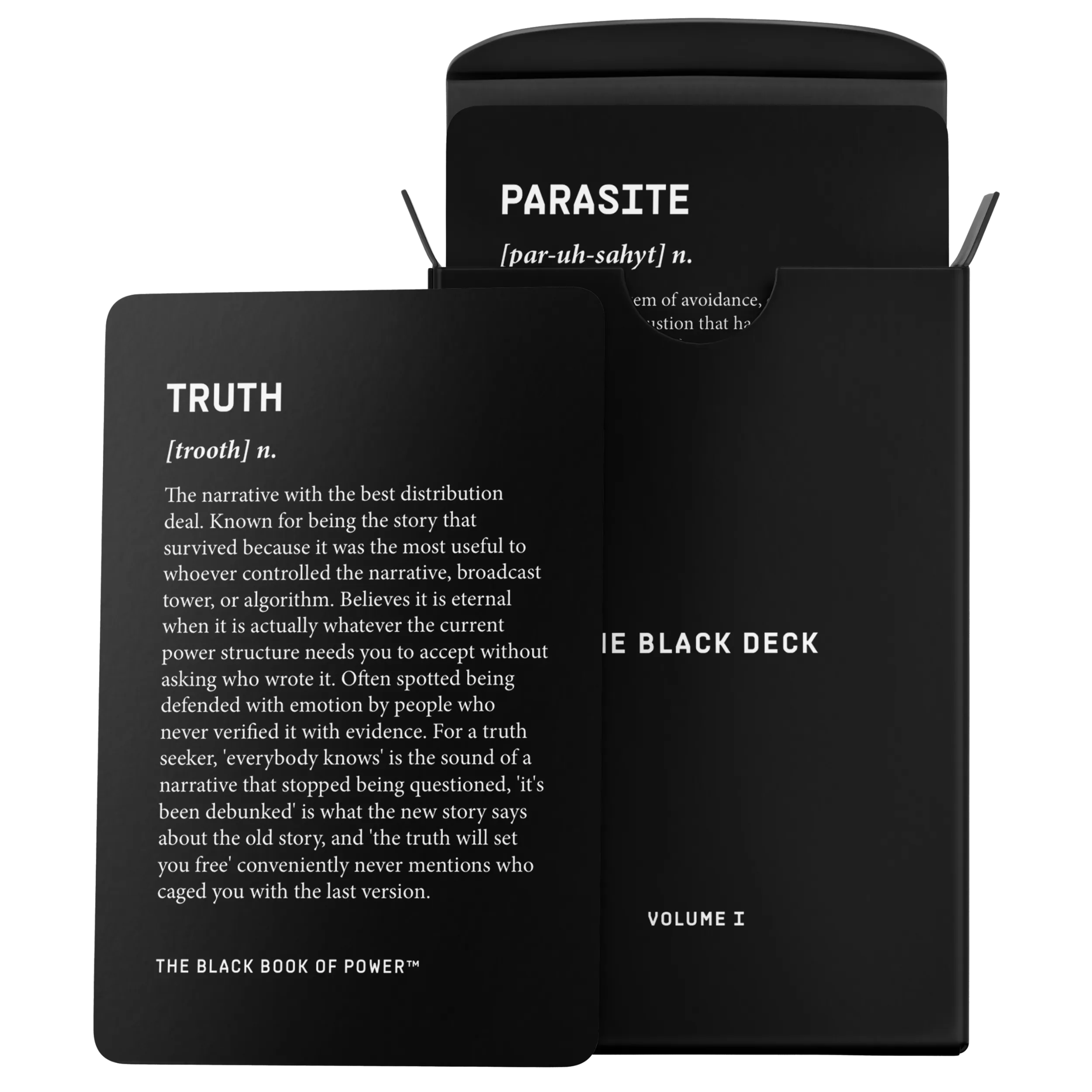
Chapter 20, “The Lonely Dictator,” maps narcissism as a self-consuming power structure: the idealize–devalue–discard–hoover cycle, why the narcissist is more dependent on you than you are on him, and the “Black Mirror” technique for turning that dependence around. The Black Book of Power is sold only at stantaylor.com.

The Black Book of Power



Conversational Narcissism: The Cannibal at the Table
Why you keep consuming the people in front of you to fill a hole dug in childhood.

A Lesson in Power Dynamics at Work
See how getting good at your job switches off the brain circuit that reads power.

The Fawn Response: An Education in Disappearing for Others
Why does being useful feels like the surest way to be loved?

The Know-It-All Personality: Why the 'Smartest' Person Builds Nothing
Why does the 'smartest' person in the room tend to build nothing?

Therapy Dependency: When Therapy Needs You to Stay Broken
In reading this, you will meet the one product the industry cannot afford to cure: the perpetual patient.

Threshold Addiction: The Dopamine of "Almost"
Why does planning feel better than doing?

Am I the Toxic One? An Honest Diagnostic
Close the wound or bleed to death believing your emotional hemorrhaging is holy.

How To Manipulate a Narcissist
Why does this person make me feel like I'm losing my mind?

The Covert Narcissist: How to Recognize the Hidden Predator
The covert narcissist is dangerous precisely because the disguise is weakness.

Self-Sabotage: Why You Do It and How to Kill the Pattern
You don't lack discipline. You're running a program that trades your future for a small, guaranteed hit of safety.

10 Signs of Manipulation (and the Counter for Each)
The ten tells a professional manipulator hopes you never learn, and the counter for each.
Dark Psychology: The Complete Guide (From Someone Who Used It)
What dark psychology actually is, from someone who ran the machinery for 23 years.

How to Deal With a Narcissist Without Losing Yourself
You cannot change a narcissist. You can become the person their tactics no longer work on.

The 9 Best Dark Psychology Books, Ranked by Someone Who Lived It
Nine dark psychology books ranked by someone who ran the plays for 23 years, and what each one will not tell you.

What Is a Dark Empath? Traits, Signs, and the Real Danger
The dark empath is dangerous precisely because empathy was supposed to be the safety feature.

The 12 Traits of a Narcissist and What They Reveal
Twelve traits, one mission: defending a self-image that must never be questioned.