


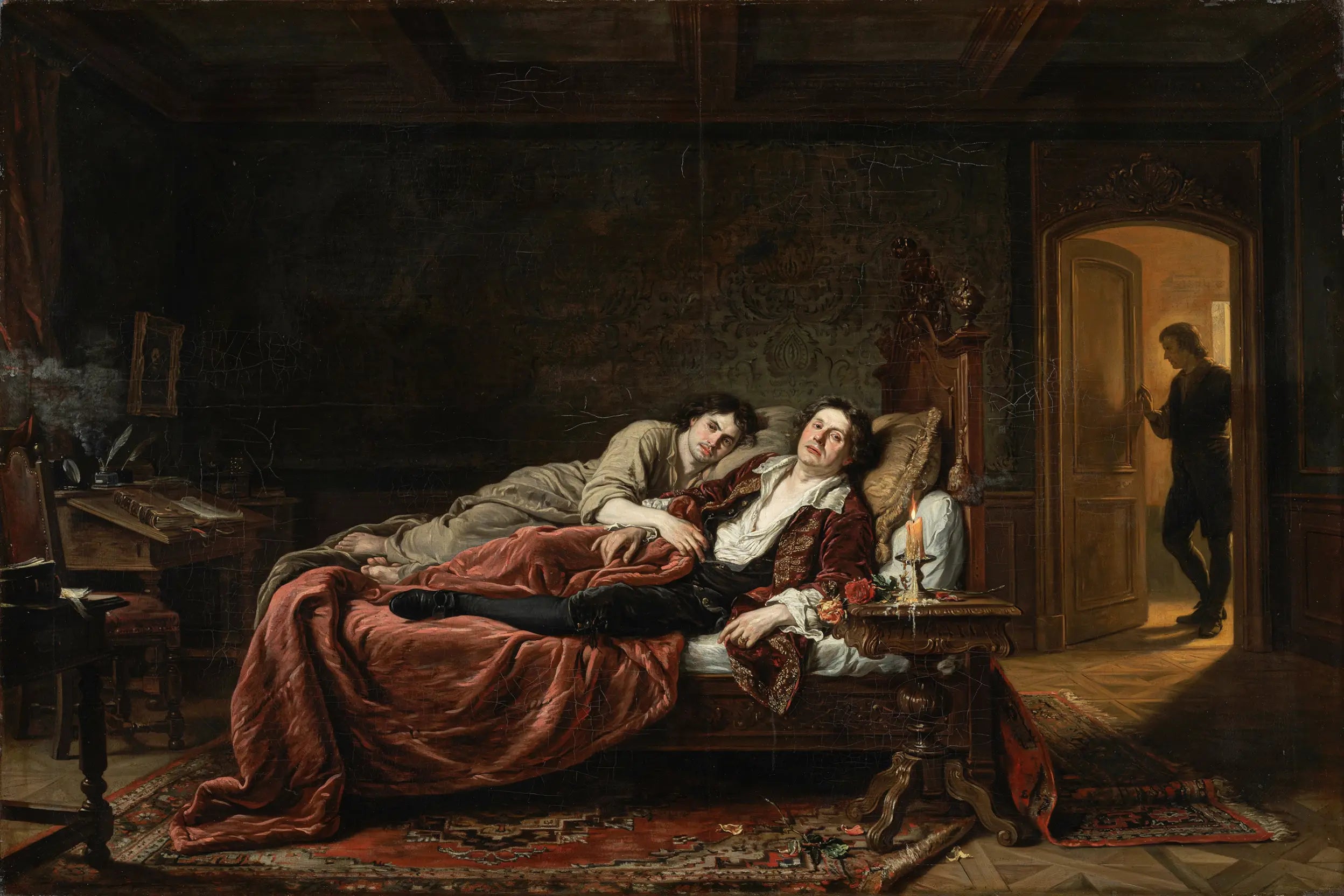
Quick answer: High achievers choose unremarkable partners through the Safe Harbor phenomenon—a form of relationship self-sabotage. Selecting someone non-threatening protects you from being truly seen, challenged, or failing in front of an equal. It feels like security but provides safety through stagnation. Research ties relationship self-sabotage to defensiveness, trust difficulty, and lack of skills. The door was always open.
You're lying in bed next to them again, scrolling through your phone while they watch another reality show. They're sweet. Dependable. They laugh at your jokes and never challenge your opinions. They think you're amazing—too amazing, actually, like they've won some cosmic lottery they don't quite deserve. And that thought makes you feel simultaneously secure and dead inside. You could leave, you know this. You could find someone who pushes you, who has their own ambitions, whose presence doesn't feel like emotional novocaine. But you don't. You won't. Because somewhere deep in your chest, beneath the success and the competence and the carefully curated confidence, there's a whisper that says: This is all you can handle. This is all you deserve.
You've built empires in boardrooms and crushed competitors in your field, yet here you are, choosing someone whose biggest decision today was whether to order Thai or pizza. Your friends don't get it. They see your achievements and wonder why you're with someone so… fine. Not bad, not toxic, just remarkably unremarkable. They use words like "settling" and you bristle because it's not that simple. This is something more insidious than settling.
This is the Safe Harbor phenomenon—a sophisticated form of relationship self-sabotage where high achievers systematically select partners who pose no threat to their carefully constructed psychological defenses.
The Safe Harbor is about using romantic relationships as a sophisticated psychological shield against your own potential. Research from 2021 identified this pattern as part of a broader constellation of relationship self-sabotage behaviors that affect up to 60% of adults, with three core components: defensiveness (accounting for 33.3% of variance), trust difficulty (14.3%), and lack of relationship skills (12.7%). But for high achievers, there's a fourth, unspoken component—the strategic selection of non-threatening partners.
The term itself emerges from attachment theory's concept of "safe haven" relationships, but with a dark twist. Where secure attachment creates a safe haven that enables exploration and growth, the Safe Harbor provides safety through stagnation. It's a relationship that protects you from the terrifying possibility of being truly seen, truly challenged, or truly failing with someone whose opinion would devastate you. The mediocre partner becomes what The Black Book of Power calls a "human shield" against your own growth.
This pattern has ancient roots. Throughout history, powerful figures have chosen partners who couldn't challenge their dominance—from emperors selecting concubines with no political power to modern CEOs dating people decades younger with no career ambitions. But what we're seeing now is different. This is about fear dressed up as preference, anxiety masquerading as attraction.
Neuroscience research from 2022 reveals something shocking: your brain processes romantic attraction through the same circuits that evaluate physical threats. The amygdala—your brain's alarm system—becomes hyperactive in insecurely attached individuals when viewing potential partners who might challenge them. Meanwhile, the ventral tegmental area (VTA), which floods your system with dopamine when you see someone you're attracted to, shows decreased activation in people with high achievement anxiety.
Think about that for a moment. Your brain is literally rewarding you less for attraction to equals and punishing you more for the vulnerability they require. Studies using fMRI scanning found that people with insecure attachment show 40% less activation in reward centers when viewing photos of ambitious, successful potential partners compared to those they perceived as "safe." The nucleus accumbens—your motivation headquarters—essentially goes offline when confronted with someone who might see through your impostor syndrome.
Here's where it gets truly wild. Research published in 2024 found that cortisol levels in high achievers spike 35% higher when on dates with intellectual equals compared to dates with less accomplished partners. Your stress hormones are literally screaming at you to run from people who match your achievement level. The hypothalamic-pituitary-adrenal (HPA) axis—your body's stress response system—treats an accomplished partner like a threat to survival.
The most damning evidence comes from studies on long-term couples. When researchers tracked brain activity in people who'd been married 20+ years, those in "mismatched" relationships (where one partner significantly out-achieved the other) showed patterns identical to those in new relationships—sustained VTA activation, consistent dopamine release. But here's the twist: this only held true when they were the higher-achieving partner. Being the "bigger fish" kept the brain's reward system engaged. Being matched or exceeded? The reward system gradually shut down, replaced by chronic stress activation.
Let's talk about the elephant in the relationship room—the savage reality that men systematically prefer women with lower socioeconomic status. Multiple studies from 2020-2024 found that men integrate information about women's status into romantic decisions, consistently choosing women with lower SES, especially for long-term relationships. The effect intensifies when the status difference is educational rather than financial. Men perceive highly educated women as less likeable and less faithful. Less faithful. As if intelligence and achievement somehow correlate with infidelity.
Women aren't immune to their own version of this trap. A 2024 meta-analysis of over 40,000 participants found women consistently score higher on fear of success measures, with the effect remaining stable across cultures. But here's the kicker—this fear is partially justified. Swedish research using election data found that women who won political office experienced divorce rates double those of women who narrowly lost. The effect was largest when the woman became the primary earner. Success literally costs women their relationships.
The marketplace data is brutal. In elite MBA programs, single women underreport their career ambitions when they know male classmates will see their answers—claiming desired salaries $18,000 lower than their true preferences, reducing stated work hours by four per week, and cutting travel days by seven monthly. Seventy-three percent of single women avoided career-enhancing actions due to fears of appearing "too ambitious." Married women? No such pattern. Men? No such pattern regardless of relationship status.
This creates what I call "achievement armor"—high-achieving women unconsciously select unambitious partners as preemptive protection against the documented relationship penalties of female success. It's risk management based on empirical reality. The Safe Harbor partner can't be threatened by your success because they never expected to match it in the first place.
Here's where the psychology gets truly twisted. Research from 2015 found that impostor phenomenon in relationships correlates at r=.67 with low self-esteem—accounting for 44% of variance. People with impostor syndrome feel like frauds in love. And what better way to avoid being exposed as a fraud than choosing a partner who lacks the sophistication to see through you?
The data is devastating. Individuals with impostor phenomenon show significantly higher attachment anxiety (r=.492) and attachment avoidance (r=.245). They literally cannot neurologically process the possibility that an accomplished partner could genuinely love them. The cognitive dissonance would shatter their entire self-concept. So they choose partners who confirm their worst beliefs about themselves—that they're only loveable when they're the impressive one, the together one, the one with their shit figured out.
This connects directly to what The Black Book of Power identifies as The Parasite—that inner voice that whispers you're not enough, that your success is luck, that discovery of your "true" inadequate self is always one intimate conversation away. The mediocre partner can't trigger this parasite because they're too busy being grateful you chose them. They become accomplices in your self-deception, validating your surface success while never pushing deep enough to expose the terror beneath.
Studies on self-handicapping reveal the mechanism: high achievers create obstacles to their own success to protect their ego from potential failure. In relationships, the mediocre partner IS the handicap. If the relationship fails, you can blame their limitations. If it succeeds, you're a hero for "making it work" with someone beneath your level. Either way, your ego stays protected from the devastating possibility that you might fail with an equal.
Your attachment system—the biological infrastructure designed to help you bond—has been hijacked by your success anxiety. Research from 2016 shows that under chronic stress (like, say, maintaining a high-powered career), the attachment system shifts from approach to avoidance. Your nervous system literally rewires itself to perceive intimacy as danger.
Here's what's happening in your body when you meet someone impressive: Your amygdala fires like you're being chased by a bear. Your prefrontal cortex—the rational part that could override this fear—goes offline. Your hippocampus starts creating fear memories associated with accomplished partners. Your anterior cingulate cortex, which processes social pain, activates as if you're already being rejected. Within milliseconds, before you're even consciously aware, your brain has decided this person is unsafe.
Meanwhile, when you meet someone unthreatening? Your nervous system sighs with relief. Cortisol drops. Dopamine, the gentle drip of safety, rises. Your vagus nerve, which regulates your rest-and-digest response, activates. You mistake this physiological relief for compatibility. You confuse the absence of threat for the presence of love.
The stress research is particularly damning. Women who received 20-second hugs from romantic partners before stressful tasks showed significantly reduced cortisol—but only when they felt safe with that partner. The "safety" that reduced stress wasn't emotional intimacy or love. It was the absence of threat. Mediocre partners excel at providing this neurobiological pacification. They're human Xanax, regulating your nervous system through their inability to truly activate it.
Recognizing this pattern doesn't magically fix it. Your nervous system has been conditioned over years, possibly decades, to equate challenge with danger and mediocrity with safety. The Black Book of Power's concept of The Contract—that unconscious agreement you've made to trade your potential for safety—applies perfectly here. You've signed a deal with your fear: "I'll choose partners who can't hurt me, and in exchange, I'll never experience the growth that comes from true intimacy."
The first step is recognizing that your picker is broken. Research on relationship sabotage shows that these patterns operate in self-reinforcing loops. Your defensive behaviors create relationship problems, which confirm your fears, which strengthen your defenses. You're creating evidence that your choice is right.
If you're serious about breaking free, you need what researchers call "earned security"—developing secure attachment through conscious practice despite your history. This means deliberately choosing discomfort. When you meet someone impressive and your body screams "run," that's your cue to lean in. When a date's accomplishments trigger your impostor syndrome, that's valuable data about your growth edges, and certainly not a red flag about compatibility.
Start with small challenges. Date someone who reads books you haven't read. Who has expertise in areas you don't. Who calls you on your bullshit—gently, but firmly. Notice your body's response. Notice the stories your mind creates. "They'll realize I'm not that smart." "They'll leave when someone better comes along." "They'll judge my achievements as insufficient." Write these fears down. They're the bars of your cage becoming visible.
The paradox is that the partner who triggers your impostor syndrome might be the one who can heal it—if you can tolerate the discomfort long enough to let them truly see you. Studies on long-term relationships show that being genuinely known and accepted by a partner gradually rewires the attachment system. But this requires choosing someone capable of genuine knowing, an equal who sees both your power and your terror and chooses to stay.
Let me paint you a picture of where the Safe Harbor leads. Longitudinal research tracking couples over 15 years found that relationships with significant achievement gaps show predictable deterioration patterns. Years 1-3: Relief and gratitude. The high achiever feels appreciated, the lower achiever feels chosen. Years 4-7: Creeping resentment. The high achiever feels intellectually starved, the lower achiever feels perpetually inadequate. Years 8-12: Parallel lives. Emotional distance masked by routine. Years 13+: The crisis. Affairs with intellectual equals. Sudden divorce "from nowhere." Or worse—resignation to a half-life, achievement in the boardroom and emptiness at home.
The opportunity cost is staggering. While you're managing a relationship that requires you to dim your light, your equals are forming power couples that amplify each other's potential. They're having conversations that sharpen their thinking, challenges that fuel their growth, support that comes from genuine understanding rather than awe. You're getting validation; they're getting transformation.
But here's what really breaks my heart about this pattern: the mediocre partner suffers too. They know, on some level, that they're a security blanket rather than a genuine choice. They feel the distance you maintain, the parts of yourself you won't share because they "wouldn't understand." They develop their own impostor syndrome about their worthiness of your love. The Safe Harbor diminishes them.
The Black Book of Power talks about mutual parasitism—relationships where both parties' weaknesses feed off each other. That's what the Safe Harbor becomes. Your fear of exposure feeds their insecurity. Their limitations feed your need to feel superior. You're enabling each other's smallest selves.
There's another layer to this that we need to discuss—the unique burden of visible success. When you're at the top of your field, every relationship becomes a potential transaction. Research from 2020 found that high-status individuals face what researchers call "strategic intimacy"—people approaching them with agendas, conscious or unconscious. The higher you climb, the harder it becomes to discern genuine attraction from opportunity-seeking.
This creates what I call "success paranoia." You've been approached by gold diggers, social climbers, and people who want proximity to your power more than connection to your person. So you overcorrect. You choose someone who predates your success, who "knew you when," who can't possibly be using you because they have nothing to gain. The mediocre partner becomes proof of their pure intentions—they must really love you because why else would they be here?
But this is another trap. You're conflating absence of ambition with presence of authenticity. Studies on power dynamics in relationships show that genuine love can exist across achievement gaps, but it requires both partners to actively navigate the power differential. When you choose someone specifically for their lack of ambition, you're purchasing emotional insurance.
The tragedy is that there are accomplished people who would love you genuinely, who have their own success and don't need yours, who could meet you as equals in both power and vulnerability. But finding them requires risking rejection from someone whose opinion matters. It requires believing you're worthy of being chosen by someone who has options. It requires dismantling the entire psychological architecture you've built around being the impressive one.
Beneath the fear of exposure, beneath the impostor syndrome, beneath the need for safety, there's an even more fundamental terror: the fear of your own potential. The Black Book of Power calls this The Crown of Shadows—the responsibility that comes with fully claiming your power. A mediocre partner protects you from the obligation to become who you're capable of being.
Think about it. If you chose someone extraordinary, someone who saw and expected your full potential, you'd have to deliver. No more coasting on comparative success. No more being the impressive one by default. You'd have to show up fully, consistently, vulnerably. You'd have to stop using your achievements as armor and start using them as tools for genuine connection.
Research on fear of success reveals this paradox: we're afraid of what success demands. Success in love—real love, with an equal—demands that you integrate all parts of yourself. The powerful professional and the scared child. The competent leader and the confused human. The one who has answers and the one desperate for someone else to provide them.
A mediocre partner lets you maintain the split. You can be powerful at work and small at home, or powerful at home and never have to bring that power to work. You never have to integrate. You never have to be whole. The Safe Harbor is protecting you from having to reconcile your strength and weakness into one integrated self.
Here's something that will blow your mind: chronic achievement actually changes your brain structure. High achievers show increased gray matter in areas associated with threat detection and decreased gray matter in areas associated with trust and bonding. Your success is literally rewiring you to be worse at love.
The mechanism is heartbreaking. Every time you succeed in a competitive environment, your brain releases dopamine—but also cortisol. The stress of maintaining high performance creates a chronic state of threat detection. Your amygdala grows more sensitive. Your hippocampus—which helps you form positive memories—shrinks. You become neurologically primed to see danger where others see opportunity, to expect betrayal where others expect support.
This creates what researchers call "achievement-induced attachment dysfunction." The very traits that make you successful—vigilance, self-reliance, emotional control—make you terrible at intimacy. And because these changes happen gradually, you don't notice. You think you're choosing mediocre partners because you're picky. Really, your brain has been hijacked by your success.
Studies using DTI imaging found that high achievers have decreased white matter connectivity between emotional processing regions and executive function regions. Translation? The part of your brain that feels and the part that decides have stopped talking to each other. When you meet someone impressive, your emotional brain screams danger but can't explain why to your rational brain. So you rationalize: "No spark." "Something's off." "They're not my type." Your brain is protecting you from a threat that exists only in your neural wiring.
One last point, and this might be the most important thing I say: your brain's betrayal is reversible. Neuroplasticity research shows that attachment patterns can be rewired at any age through consistent practice. But it requires something that goes against every instinct you've developed: deliberate vulnerability with someone who could actually hurt you.
The Black Book of Power talks about The Marble Statue—developing the ability to remain emotionally sovereign while being completely open. This is about being so secure in your worth that another person's judgment can't destroy you. The mediocre partner is a false fortress. The real fortress is internal—the unshakeable knowledge that you're worthy of being chosen by someone who has options.
The research on earned security is clear: it takes approximately two years of consistent secure relating to rewire attachment patterns. Two years of choosing the harder conversation. Two years of staying present when your body wants to run. Two years of letting someone impressive see your unimpressive moments. It's the neurological equivalent of rehabilitation after an injury—slow, painful, but possible.
But here's the thing about those two years: they're going to pass anyway. You can spend them deepening the groove of your Safe Harbor pattern, becoming more entrenched in your comfortable prison. Or you can spend them in the terrifying, exhilarating work of learning to love and be loved by an equal. The choice—the real choice, not the one your fear makes for you—is yours.
The brutal truth is this: the Safe Harbor is a slow-motion shipwreck where you trade the sharp pain of potential rejection for the dull ache of permanent disconnection. You're guaranteeing heartbreak spread out over decades instead of concentrated in moments. The partner who could break your heart is the only one who could truly heal it. The one who challenges your impostor syndrome is the only one who could help you see it's a lie.
You built an empire in the world. Now the question is whether you have the courage to stop hiding in relationships that demand nothing of you. Whether you can tolerate being chosen by someone whose standards match your own. Whether you can risk being seen, fully seen, by eyes capable of recognizing both your power and your terror—and choosing to stay.
The Safe Harbor feels like protection, but it's a prison. And the door has always been open. You just have to be brave enough to sail into deeper waters, where real love lives—terrifying, transformative, and worth every moment of the fear you'll face to find it.
FAQ
Because their brains treat equals as threats. Neuroscience research from 2022 shows romantic attraction is processed through the same circuits that evaluate physical danger, and 2024 research found cortisol spikes 35% higher in high achievers dating intellectual equals than dating less accomplished partners. The ‘safe’ partner isn’t a preference — it’s threat avoidance wearing the costume of contentment.
The terror that a true peer could expose you. A 2024 meta-analysis of over 40,000 participants found women consistently score higher on fear-of-success measures across cultures, while impostor phenomenon correlates with low self-esteem at r=.67 and predicts both attachment anxiety and avoidance. If you secretly believe your success is a performance, you’ll choose partners who lack the vantage point to see through it.
Emotional novocaine. The partner who never challenges you feels secure and leaves you dead inside — scrolling your phone next to someone who thinks they won a cosmic lottery they don’t deserve. It’s the Safe Harbor: it looks like protection and functions as a prison, keeping both your power and your terror comfortably unexamined. The door has always been open.
Chapter 7, ‘Strings of the Heart,’ maps the Ten Hungers and the difference between wanting and liking — the machinery that keeps you ‘safe’ and starving. Chapter 5, ‘The Parasite,’ confronts the whisper that says this is all you deserve. The Black Book of Power is sold exclusively at stantaylor.com, with a 90-day money-back guarantee.

The Black Book of Power



Conversational Narcissism: The Cannibal at the Table
Why you keep consuming the people in front of you to fill a hole dug in childhood.

A Lesson in Power Dynamics at Work
See how getting good at your job switches off the brain circuit that reads power.

The Fawn Response: An Education in Disappearing for Others
Why does being useful feels like the surest way to be loved?

The Know-It-All Personality: Why the 'Smartest' Person Builds Nothing
Why does the 'smartest' person in the room tend to build nothing?

Therapy Dependency: When Therapy Needs You to Stay Broken
In reading this, you will meet the one product the industry cannot afford to cure: the perpetual patient.

Threshold Addiction: The Dopamine of "Almost"
Why does planning feel better than doing?

Am I the Toxic One? An Honest Diagnostic
Close the wound or bleed to death believing your emotional hemorrhaging is holy.
How To Manipulate a Narcissist
Why does this person make me feel like I'm losing my mind?
The Covert Narcissist: How to Recognize the Hidden Predator
The covert narcissist is dangerous precisely because the disguise is weakness.

Self-Sabotage: Why You Do It and How to Kill the Pattern
You don't lack discipline. You're running a program that trades your future for a small, guaranteed hit of safety.

10 Signs of Manipulation (and the Counter for Each)
The ten tells a professional manipulator hopes you never learn, and the counter for each.
Dark Psychology: The Complete Guide (From Someone Who Used It)
What dark psychology actually is, from someone who ran the machinery for 23 years.

How to Deal With a Narcissist Without Losing Yourself
You cannot change a narcissist. You can become the person their tactics no longer work on.

The 9 Best Dark Psychology Books, Ranked by Someone Who Lived It
Nine dark psychology books ranked by someone who ran the plays for 23 years, and what each one will not tell you.
What Is a Dark Empath? Traits, Signs, and the Real Danger
The dark empath is dangerous precisely because empathy was supposed to be the safety feature.

The 12 Traits of a Narcissist and What They Reveal
Twelve traits, one mission: defending a self-image that must never be questioned.