



Quick answer: Because ‘just say no’ is neurologically impossible when your brain treats rejection like a tiger, stopping requires working with your nervous system, not willpower. Use the three-second pause to interrupt the automatic yes, rewire the fawn response gradually, and renegotiate relationships. Your nervous system can be rewired, but exhaustion or explosion will force boundaries eventually—choose consciously first.
Your throat tightens when your boss texts at 9 PM. Your stomach drops when a friend asks for yet another favor you don't have time to give. Your shoulders carry the weight of everyone's emotional weather while your own needs sit in the back row, hands folded, waiting for permission to speak.
You say yes when everything in you screams no, and then spend the night cataloging what you sacrificed: time with your children, your creative project, and your exhausted body's desperate need for rest. The resentment builds like compound interest, but you'll smile tomorrow and do it all over again.
This is the most socially acceptable form of self-destruction in modern society: chronic people-pleasing.
The stakes are higher than you think. Recent research demonstrates that chronic people-pleasing correlates with depression at r=0.31, anxiety at r=0.28 to 0.30, and serves as a transdiagnostic mechanism explaining 59 to 93 percent of the variance between personality vulnerability and clinical mental health disorders. In a groundbreaking 2025 study of 2,203 Chinese university students, researchers identified that 45.3 percent exhibited moderate people-pleasing patterns, while 3.45 percent showed severe tendencies associated with significantly lower mental well-being, higher neuroticism, social avoidance, and loneliness. Women report this pattern affects their lives negatively at rates 26 percentage points higher than men, with 59 percent saying people-pleasing makes their lives harder.
Meanwhile, your body keeps score in ways you might not even understand, like elevated cortisol coursing through your veins, flattened heart rate variability signaling a nervous system that never quite settles into safety, chronic inflammation wearing down your organs, and neural pathways that have been carved so deep by repetition that saying no feels like stepping off a cliff.
You may think this is a personality quirk you can positive-think your way out of, but it's actually a nervous system under siege, and the siege began long before you had words to describe it.
The neuroscience tells a story written in the ancient language of survival that predates your capacity for rational thought. When UCLA researchers placed 32 teenagers in an fMRI scanner and showed them photos with varying numbers of social media "likes," the nucleus accumbens—your brain's primary reward center, the same region that lights up when you bite into chocolate or receive money—activated dramatically for highly validated content. But when participants viewed disapproving facial expressions, the amygdala, your ancient threat detector buried deep in the temporal lobes, activated bilaterally with the kind of intensity typically reserved for immediate physical danger.
The dorsal anterior cingulate cortex, which processes the affective component of pain—the part that makes pain feel bad rather than just registering it as sensation—showed activation that correlated at r=0.70 with self-reported rejection sensitivity. The correlation between what people said they felt and what their brains showed was so strong it approached the theoretical maximum for biological measurements. Even more telling, the ventromedial prefrontal cortex and subgenual anterior cingulate, regions responsible for dampening threat responses and helping you think rationally about whether that frown really means the end of the world, showed inverse activation. This means your emotional regulation systems go offline precisely when you need them most, leaving you neurologically naked in the face of perceived social threat.
From an evolutionary standpoint, being cast out of the tribe meant death—no protection from predators lurking in the darkness, no shared resources during scarce times, no help when injured, and no reproductive opportunities to pass on your genes. Your nervous system evolved over millions of years to interpret social rejection as an existential threat requiring immediate action. UCLA neuroscientist Matthew Lieberman's groundbreaking work demonstrates that social pain and physical pain share overlapping neural circuitry to such a degree that acetaminophen—yes, regular Tylenol—can actually reduce the emotional pain of social rejection. When you say "my feelings are hurt," the pain is neurologically, biochemically, measurably real.
The hypothalamic-pituitary-adrenal axis—your body's stress response superhighway—doesn't distinguish between a disapproving look from your mother-in-law and a charging rhinoceros. When your amygdala detects potential social threat, it sends an urgent message to your hypothalamus, which releases corticotropin-releasing hormone like pulling a fire alarm. This triggers your pituitary gland to secrete ACTH (adrenocorticotropic hormone), which races through your bloodstream to your adrenal glands, commanding them to flood your system with cortisol. Under acute stress, cortisol levels can increase nine-fold from baseline. In medical students, researchers measured cortisol rising from approximately 2.5 nanograms per milliliter during relaxed periods to 5.0 during examination stress—a doubling that occurs within minutes.
Chronic people-pleasing becomes a biological trap. When this system activates day after day, like when you say yes when you mean no, scan someone's face for signs of disapproval, or rehearse conversations to avoid conflict, the machinery begins to break down. Some people-pleasers develop hyperactivation patterns with persistently elevated basal cortisol, like a smoke alarm that never stops shrieking. Their stress responses become so sensitized that even minor social friction triggers a full-body emergency response. Others experience the opposite: hypoactivation, where the adrenal glands become so exhausted they can barely muster a response, leaving the person in a state of biological learned helplessness with blunted responses and flattened diurnal rhythms that should rise in the morning and fall at night but instead remain eerily constant.
Both patterns leave the brain marinating in a toxic brew that fundamentally alters its structure. The hippocampus, crucial for forming new memories and distinguishing between real and imagined threats, literally shrinks under chronic stress. The prefrontal cortex, your brain's CEO responsible for executive decision-making and impulse control, shows measurable thinning. Meanwhile, the amygdala—already your most paranoid employee—actually grows larger and more reactive, becoming increasingly skilled at detecting threats that may not even exist. This creates what researchers call a feed-forward cascade: the more stressed you become, the worse your brain gets at managing stress, which makes you more stressed, which further damages your stress management systems.
Is it any wonder you feel trapped?
Your body develops its own memory of this chronic accommodation. Heart rate variability—the beat-to-beat variation that reflects your parasympathetic nervous system's ability to help you rest and digest—decreases in chronic people-pleasers, indicating sympathetic dominance that keeps you in a state of perpetual readiness for threats. Inflammatory markers including IL-6, IL-8, and C-reactive protein elevate with chronic stress, creating systemic inflammation linked to everything from depression to heart disease to autoimmune conditions. The cortisol-to-DHEA ratio, an indicator of stress resilience, worsens with chronic HPA axis activation, meaning your body loses its ability to bounce back. This manifests as persistent muscle tension that no amount of massage can release, shallow breathing that leaves you feeling perpetually oxygen-starved, chronic pain that migrates through your body like a ghost, autoimmune disorders where your body literally attacks itself, and crushing fatigue that sleep never quite cures.
The term "people-pleasing" is younger than you might imagine, though the phenomenon itself is ancient as human social organization. Karen Horney, the neo-psychoanalytic theorist who dared to break from Freud in the 1930s and 1940s, provided the first systematic framework through her concept of "moving toward people"—what she called the self-effacing solution to basic anxiety. Unlike Freud, Horney understood the feeling of being lonely and helpless in a potentially hostile world was a rational response to actual childhood experiences of neglect, harsh discipline, or rejection. She identified the core features that would define people-pleasing for the next century: excessive compliance that goes beyond normal courtesy, suppression of personal desires to avoid even the possibility of conflict, terror of abandonment that operates below conscious awareness, and an overwhelming need to be needed that becomes the organizing principle of one's entire life.
John Bowlby's attachment theory in the 1950s and 1960s revolutionized our understanding by proposing that early caregiver bonds create "internal working models"—essentially relationship blueprints that guide all future connections. Mary Ainsworth's legendary "Strange Situation" experiments in the 1970s identified anxious-resistant attachment in roughly 20 percent of children—those whose caregivers were inconsistently available, sometimes warm and responsive, other times cold or preoccupied. These children became hypervigilant emotional detectives, constantly scanning for signs of caregiver availability, clingy yet impossible to truly soothe because they never knew when the other shoe would drop. Modern neuroscience confirms these children show increased amygdala activity when faced with social rejection decades later. The research should feel sobering: 85 percent of children with insecure attachment maintain those patterns into adulthood without intervention, experiencing chronic worry about whether partners truly love them, constant need for reassurance that never quite reassures, and difficulty setting boundaries because boundaries feel like relationship-ending declarations of war.
Aaron Beck formalized the cognitive architecture of people-pleasing in 1983 by introducing "sociotropy"—a personality dimension that confers specific vulnerability to depression. Working with 378 psychiatric patients, he developed the Sociotropy-Autonomy Scale that measured three interrelated factors: obsessive concern about disapproval, desperate attachment and fear of separation, and compulsive pleasing of others. What Beck discovered would reshape how we understand depression: sociotropy predicts depression specifically following interpersonal stressors like rejection or criticism, but remains stable over time despite changes in depression severity. This suggested it was a trait—a fundamental organizing principle of personality that creates a specific kind of vulnerability. A comprehensive meta-analysis of 30,372 participants across 90 studies revealed women score higher than men with an effect size of d=0.34, but the story is more complex than simple gender differences.
The mental health data forms a constellation of suffering that's impossible to ignore. In Martinez and colleagues' 2020 study of 279 outpatients with major depressive disorder or generalized anxiety disorder, sociotropy correlated with depressive symptoms at r=0.31 and anxiety symptoms at r=0.28 to 0.30, with brooding rumination mediating 59 to 93 percent of that relationship depending on diagnosis.
Brooding—that endless loop of negative thinking about your distress—functions as the psychological mechanism translating people-pleasing tendencies into clinical symptoms. You accommodate others and then spend hours mentally rehearsing what you should have said, what they might be thinking, and what terrible consequences might unfold if you had actually expressed your needs. This rumination becomes its own form of self-torture, keeping your stress response activated long after the actual interaction has ended.
The professional costs are quantifiable. Over 40 percent of people worldwide report inability to manage workplace stress and pressure, but for people-pleasers, the statistics are even grimmer. In nursing, nearly 80 percent report entering what therapists call the "rescuer role," where professional identity as caregiver extends pathologically into personal life until there's no boundary between work and self. You become your job, and your job becomes saving everyone.
K-12 teachers rank as the number one burnout profession in the United States, with people-pleasing identified as a primary contributor—90 percent of teacher turnover is non-retirement related, meaning teachers are leaving because they're exhausted. The service industry, representing 90 percent of new jobs added from 2016 to 2026, demands constant emotional labor where displaying positive emotions regardless of internal state becomes occupational requirement. Studies of 7,075 service employees across 33 samples found all emotional labor variables positively related to emotional exhaustion, with surface acting—faking emotions you don't feel—showing the strongest associations.
The biological markers tell an even darker story than the psychological ones. Your heart rate variability—that beat-to-beat variation that indicates a healthy, responsive nervous system—decreases in chronic people-pleasers, indicating sympathetic dominance that keeps you locked in fight-or-flight even when you're supposedly relaxing. Inflammatory markers including IL-6, IL-8, and C-reactive protein elevate with chronic stress, creating the kind of systemic inflammation that researchers now know underlies everything from depression to diabetes to dementia. The cortisol-to-DHEA ratio—think of it as your body's resilience score—worsens with chronic HPA axis activation, meaning your capacity to bounce back from stress erodes like a cliff face in a hurricane.
The long-term neural adaptations read like a horror story written in brain tissue. Amygdala hypertrophy means your fear center actually grows larger and more reactive, like a smoke detector that becomes increasingly sensitive until even steam from your shower sets it off. Hippocampal atrophy—your memory center literally shrinking—explains why chronic people-pleasers often feel foggy, forgetful, unable to learn from experience that saying yes leads to exhaustion. Prefrontal cortical thinning reduces your capacity for executive function, which is why you know intellectually that you need boundaries but can't seem to implement them when it matters. Perhaps most insidiously, altered receptor expression creates glucocorticoid resistance—your body's negative feedback systems that should terminate stress responses stop working effectively, like brakes that have worn down to nothing.
When researchers need to measure people-pleasing systematically, they turn to validated instruments that reveal just how prevalent this pattern has become. The Sociotropy-Autonomy Scale, Beck's original 60-item measure, demonstrates remarkable reliability with Cronbach's alpha coefficients of 0.87 to 0.90, meaning it measures what it claims to measure with scientific precision. When Bieling and colleagues refined the scale with 2,067 psychiatric outpatients, they discovered people-pleasing contains two distinct patterns. Fear of Criticism and Rejection—the toxic core—shows strong associations with every form of psychopathology they measured. Meanwhile, Preference for Affiliation appears less pathological and might even be adaptive in certain contexts. This distinction matters: wanting connection is human, but needing approval to avoid psychological collapse is pathological.
The most recent and perhaps most alarming data comes from the Chinese People-Pleasing Questionnaire, validated in 2025 with 2,203 university students. Using latent profile analysis—a sophisticated statistical technique that identifies hidden groups within populations—researchers discovered four distinct categories that should serve as a warning. Only 14 percent showed essentially no people-pleasing tendency. Another 37 percent showed slight tendency—occasional accommodation that probably doesn't significantly impair their lives. Bu 45.3 percent showed moderate tendency, living in a constant state of self-suppression and accommodation. And 3.45 percent showed what researchers called "serious people-pleasing," with scores so high they correlated with clinical levels of neuroticism, social avoidance, and loneliness that persisted even after intervention attempts.
The gender patterns that emerge paint a picture of socialized self-destruction. YouGov surveys of nationally representative American adults from 2022 to 2024 found 48 to 49 percent of Americans self-identify as people-pleasers. The gender split tells the real story: 52 to 56 percent of women versus 42 to 44 percent of men. More revealing are the specific behaviors—15 percent of women versus 9 percent of men very often struggle to establish boundaries, a 67 percent higher rate that can't be explained by biological differences alone. Women report feeling responsible for others' emotions at rates 31 percent higher than men. In the two years leading up to 2024, the percentage of women believing they were socialized to be people-pleasers jumped from 23 percent to 38 percent—a 15-percentage-point increase suggesting rapidly growing awareness that what they thought was their personality was actually cultural programming.
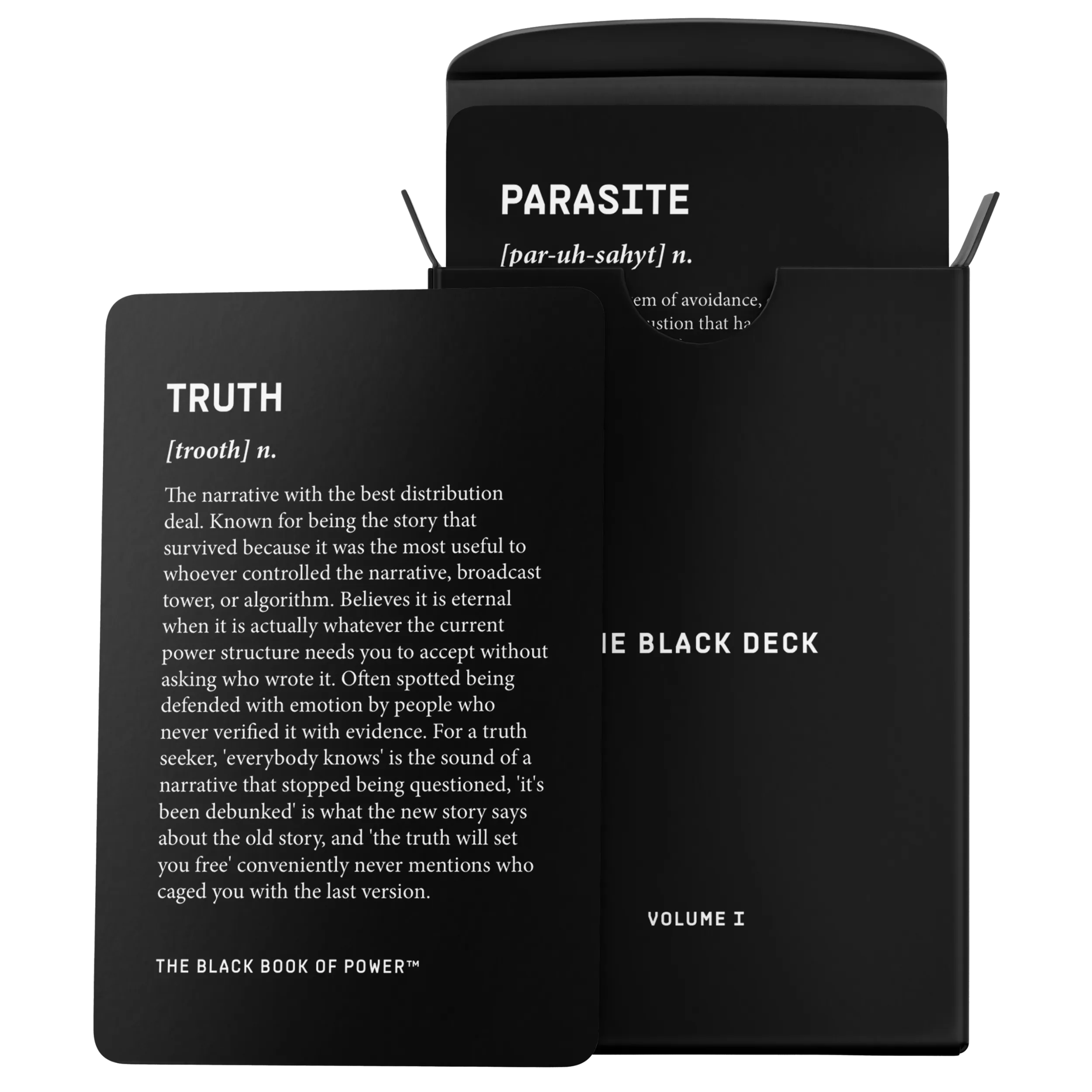
This aligns perfectly with what I identify in The Black Book of Power as the "Parasite"—that internalized voice of others' expectations that feeds on your potential while convincing you it's keeping you safe. The book's framework of Factory Settings reveals how different childhood environments create predictable patterns: the Authoritarian OS producing people-pleasers terrified of disapproval, the Permissive OS creating adults addicted to external validation, and the Inconsistent OS generating shapeshifters who masterfully adapt but have no core identity. What I call the Contract—the unconscious agreement to trade sovereignty for safety—perfectly describes the devil's bargain people-pleasers make every day.
Understanding why people-pleasing persists despite causing demonstrable suffering requires examining the neurobiological reinforcement mechanisms that operate below conscious awareness, turning accommodation into addiction. The nucleus accumbens, nestled in your brain's reward circuitry like a dealer in dopamine, processes both reward prediction and receipt with ruthless efficiency. When you successfully gain approval—that smile, that "thank you so much," that text saying you saved the day—dopamine floods your system with the same intensity as cocaine or gambling wins. Oxytocin, the so-called "love hormone" crucial for social bonding, selectively elevates dopamine overflow specifically in the nucleus accumbens, creating a synergistic effect that your brain interprets as the ultimate success. You're getting chemically rewarded for self-abandonment.
The genetic dice are loaded from birth. Variations in the oxytocin receptor gene—specifically the OXTR rs53576 A allele—associate with greater reliance on social approval, suggesting some people are biologically primed for people-pleasing before they speak their first word. But if genetics loads the gun, environment pulls the trigger. The more powerful reinforcement operates through negative reinforcement—the blessed relief from pain. When you detect disapproving facial expressions, critical tones, or even imagined rejection, your amygdala sounds the alarm with the urgency of a smoke detector at 3 AM. Your dorsal anterior cingulate cortex signals social pain with the same intensity as physical injury. Distress floods your system like water through a broken dam.
And then you accommodate. You apologize, adjust, acquiesce—and miraculously, the pain recedes. The relief is so profound, so immediate, that your brain learns with the efficiency of a machine learning algorithm: accommodation equals safety, boundaries equal danger. Pete Walker calls these "emotional flashbacks"—sudden regressions to childhood powerlessness triggered by present-day echoes of past threats. The fawn response activates before your conscious mind even recognizes what's happening, like muscle memory for self-betrayal.
But each repetition strengthens the neural pathways, creating what neuroscientists call sensitization. The threshold for activation drops lower and lower until even neutral expressions register as potential rejection. Chronic HPA axis activation causes functional and structural changes: hormone-secreting glands increase in mass, glucocorticoid receptors become desensitized requiring ever more cortisol to achieve the same effect, while arginine vasopressin receptors become hypersensitized, perpetuating stress responses even when feedback signals scream "stop." The long-term neural plasticity changes read like a medical textbook of self-inflicted wounds: amygdala hypertrophy making you increasingly reactive to smaller triggers, hippocampal atrophy impairing your ability to form new memories that might teach you accommodation doesn't work, prefrontal cortical thinning reducing your capacity to override emotional impulses with logic, and altered functional connectivity between regions meaning the different parts of your brain stop talking to each other effectively.
Before we pathologize all accommodating behavior as dysfunction, the counterevidence deserves serious consideration so as to understand why this pattern is so universal and persistent. From an evolutionary neuroscience perspective, Professor RJ Starr notes in research on approval-seeking that acceptance by the group once meant the literal difference between life and death. Being cast out meant immediate physical danger: death by predator, starvation from lack of shared resources, inability to hunt large game alone, and zero chance of passing on your genes. Our nervous systems evolved to interpret rejection as life-threatening because for 99.9% of human history, it was.
The research on prosocial behavior complicates the narrative further. Studies show positive correlations with psychological well-being (r=0.396), positive affect (r=0.274), and negative correlations with negative affect (r=-0.191). When people engage in genuinely voluntary helping—cooperating, comforting, sharing—without anticipated personal disadvantage, they experience increased happiness, enhanced immune function, and even longer lifespans. We are biologically wired to help, and accommodation plays essential roles in every healthy relationship. Rusbult and colleagues' seminal research on accommodation processes found that the willingness to respond constructively when a partner behaves destructively—rather than meeting destruction with destruction—strongly predicts relationship satisfaction, stability, trust, and longevity.
The critical distinction emerges in its origin and impact. Healthy accommodation flows from genuine care rather than fear, maintains reciprocity where both partners accommodate equally, preserves awareness of your own values even while considering others', allows flexibility to decline when necessary, produces mutual benefit and satisfaction, feels authentic and purposeful rather than performative, and represents conscious choice made from strength. Pathological people-pleasing operates from terror of abandonment, flows one-directionally with self-sacrifice, involves complete loss of personal identity, manifests as compulsion that cannot stop even when harmful, produces resentment and exhaustion, feels fraudulent and depleting, and represents automatic fear-driven response regardless of context.
Cultural context fundamentally alters interpretation. Roughly 70 percent of the world's population lives in collectivist cultures where interdependence, group cohesion, and social harmony take precedence over individual desires. In Japan, China, Korea, and much of Latin America, Africa, and the Middle East, preserving group harmony carries supreme cultural value. What Western individualistic psychology labels pathological "people-pleasing" may represent normative, adaptive, even morally superior behavior in these contexts. The research bears this out: cultural differences in prosocial behavior between nations are mediated by "harmony-seeking"—when everyone in the culture values group cohesion, accommodation looks less like individual pathology and more like collective wisdom.
The transformation from compulsive people-pleasing to conscious choice demands rewiring neural pathways carved by years or decades of repetition. Multiple therapeutic modalities offer evidence-based approaches, each targeting different aspects of the people-pleasing system with varying degrees of empirical support.
Internal Family Systems therapy conceptualizes people-pleasing as a protective "Manager" part—a proactive protector that developed when expressing needs meant danger. The IFS process involves getting curious about this part through body scans, assessing your relationship with it without judgment, direct dialogue asking what it fears would happen if you stopped pleasing, extending compassion and gratitude for its protective intent, helping it release its burdens of fear and shame, and inviting transformation where it becomes an ally bringing genuine kindness without self-sacrifice. Clinical reports indicate increased self-awareness, improved boundaries, reduced resentment, and greater authenticity—though randomized controlled trials specifically targeting people-pleasing remain limited.
Cognitive Behavioral Therapy targets the distorted thought patterns maintaining the pattern: catastrophizing ("If I say no, they'll hate me forever"), unrealistic responsibility ("I must keep everyone happy or I'm worthless"), and validation dependence ("Others' opinions determine my value"). Through systematic thought records, behavioral experiments, and graduated exposure to boundary-setting, CBT helps build evidence that relationships can survive your authenticity. Assertiveness training—teaching "I" statements, respectful declining, and progressive exposure from low-stakes to high-stakes boundaries—shows promising results. An 8-week RCT with 100 participants demonstrated stress reduction (d=0.52), anxiety reduction (d=0.30), and depression reduction (d=0.21).
Somatic approaches recognize people-pleasing as a nervous system phenomenon rooted in trauma. Techniques include pendulation between comfort and discomfort, tracking moment-to-moment bodily sensations, identifying body memories of safety, discharge through shaking or vocalization, and grounding through physical support. A 2021 review of 16 studies found preliminary evidence for effectiveness on PTSD symptoms with large effect sizes, though the people-pleasing-specific evidence base remains underdeveloped.
Dialectical Behavior Therapy's interpersonal effectiveness module provides concrete communication tools through acronyms like DEAR MAN (Describe, Express, Assert, Reinforce, Mindful, Appear confident, Negotiate) for making requests or declining them, GIVE skills for maintaining relationships while setting boundaries, and FAST skills for maintaining self-respect without over-apologizing. These skills directly address the mechanical aspects of people-pleasing and how to stop doing it in real-time interactions.
Acceptance and Commitment Therapy, with over 1,300 randomized controlled trials as of 2025, focuses on developing psychological flexibility—the ability to stay present with difficult feelings while acting according to values. For people-pleasers, this means accepting the discomfort of others' potential disappointment while choosing actions aligned with personal values rather than fear. The emphasis on values clarification helps distinguish between genuine care for others and fear-driven accommodation.
The 21-Day Empathy Protocol from The Black Book of Power offers a structured approach to transforming "bleeding wound" empathy into what he calls "warm precision"—understanding others completely while maintaining emotional sovereignty. The protocol's three phases—demolishing false empathy, forging true understanding, and integrating ethical power—provide a roadmap for maintaining connection without self-abandonment. My concept of the Marble Statue—remaining calm and unmoved amidst others' emotional storms—offers a powerful metaphor for the state of empowered boundaries.
The practical transformation begins with what might seem like the smallest possible intervention: the pause. Before responding to any request, before agreeing to any demand, before sacrificing yourself on the altar of others' convenience, you pause for three seconds. In those three seconds, you ask yourself a single question: "What would I choose if I knew they wouldn't be upset?" This question bypasses the complex web of guilt, obligation, and fear to touch something more fundamental—your actual desire, buried under years of accommodation.
The pause practice requires linguistic scaffolding. "Let me check my schedule and get back to you" becomes your default response to non-urgent requests. "I need to think about whether I can commit to that" for larger asks. "That won't work for me" for clear boundary violations. Notice these phrases contain no apology, no explanation, and no justification. You're no longer asking permission to have boundaries and you're stating them as facts. This is what I call killing the Parasite—taking decisive action that breaks the pattern of automatic compliance.
The body keeps score of every boundary you set or fail to set. Start tracking your somatic responses: Does your throat constrict or open when considering a request? Do your shoulders rise toward your ears or settle down your back? Does your breathing become shallow or deep? These bodily signals often know the truth before your conscious mind admits it. When your body contracts, that's a no—even if your mouth hasn't caught up yet. Learning to trust these somatic signals is part of what somatic therapists call "re-inhabiting" your body after years of dissociation from your own needs.
The middle path is about what Buddhist psychology calls "wise compassion" versus "idiot compassion." Wise compassion recognizes that enabling others' dysfunction through endless accommodation prevents them from developing their own coping skills. Idiot compassion sacrifices yourself to temporarily soothe others' discomfort, creating dependency rather than growth. The questions that distinguish them are practical: Is this relationship mutual, with accommodation flowing both directions? Does this align with my values or only theirs? Do I feel energized or depleted afterward? Am I being genuine or performing? Could I say no if I wanted to? When the answers reveal imbalance, the accommodation isn't generous—it's compulsive.
The self-help industry's breezy advice to "just set boundaries" or "just say no" reveals a fundamental misunderstanding of how deeply people-pleasing is wired into your nervous system. You can't positive-think your way out of neural pathways carved by decades of repetition any more than you can wish away a broken bone. The solution requires systematic reconditioning at the nervous system level, literally rewiring the brain's threat detection and response systems.
Start with what researchers call "titrated exposure"—microscopic doses of boundary-setting that don't overwhelm your system. Begin with strangers: decline the store credit card offer, say no to the person asking for money, don't hold the door if you'd have to wait more than two seconds. These seem trivial, but they're training your nervous system that minor disappointment doesn't equal death. Your amygdala needs evidence (that's why affirmation never stick). Each successful survival of someone's mild displeasure updates your threat assessment algorithms.
Progress to low-stakes relationships: decline social invitations you don't want to attend, express food preferences instead of eating whatever's served, state your actual opinion about the movie instead of agreeing reflexively. Notice the discomfort—racing heart, sweaty palms, churning stomach—and breathe through it without rescuing yourself through accommodation. This is what stress inoculation looks like: controlled exposure to manageable stress that builds resilience to larger stressors.
The medium-stakes boundaries require more courage: telling your hairdresser you don't like the cut, sending food back at a restaurant, disagreeing with a colleague in a meeting, saying no to overtime you don't want. Here, the discomfort intensifies, and your nervous system will scream that you're in danger. This is where somatic grounding becomes essential—feet firmly on floor, spine straight but not rigid, breathing into your belly rather than your chest. You're teaching your body that you can feel uncomfortable and survive.
High-stakes boundaries—with family, intimate partners, or anyone who holds power over your security—require the full arsenal from The Black Book of Power. This might mean declining your mother's guilt-laden request, telling your partner their behavior is unacceptable, or informing your boss you won't work weekends anymore. These conversations trigger what feels like mortal terror because, evolutionarily speaking, challenging those with power over your resources was mortally dangerous. Your body doesn't know you won't be cast out of the cave to die. It only knows the old program: comply or perish.
One last point, and this might be the most important thing to understand about your people-pleasing: beyond making you miserable, it's also making you dangerous. Your people-pleasing brain might think i'm referring to setting boundaries making you selfish or cruel (see it at work?), but I mean dangerous in the way accommodation without authenticity always becomes dangerous. You're teaching everyone around you that their needs matter more than yours and creating relationships built on fundamental inequality. You're enabling others' dysfunction by never requiring them to respect limits. You're modeling self-abandonment for your children, who learn by watching that love means self-sacrifice. And perhaps most insidiously, you're building the kind of resentment that eventually explodes in ways that actually do damage relationships—the very outcome you've been destroying yourself to avoid.
So what happens to chronic people-pleasers over time? The correlation with depression (r=0.31) and anxiety (r=0.28-0.30) is predictive. The 59-93% of variance explained by rumination means you're replaying, rehearsing, and reliving every interaction in an endless loop of self-torture. The biological markers—elevated cortisol, inflammatory cascades, hippocampal atrophy, prefrontal thinning—won't reverse themselves while you wait for permission to matter. Your body is keeping score in ways that will eventually present a bill you can't pay with accommodation.
In The Black Book of Power, I make it crystal clear: the Parasite is farming you. Every time you abandon yourself to soothe others' discomfort, you're feeding a system that profits from your submission. The Contract you signed—trading sovereignty for safety—was written when you were too young to read the fine print. Now you're old enough to burn it. The 72-Hour Phoenix Protocol Taylor describes—that intense period of psychological death and rebirth—might seem extreme, but it's proportional to the extremity of spending your entire life as a supporting character in everyone else's story.
The final warning, then, isn't that people-pleasing will kill you, though the stress might. It's not that it will ruin your relationships, though the resentment might. Every moment you spend accommodating from fear rather than choosing from love is a moment you'll never get back. Every "yes" that should have been "no" is a small death of the person you could have been. And while your nervous system can be rewired, your hippocampus can recover some volume, and your relationships can be renegotiated, time moves in only one direction. Exhaustion or explosion will force the eventual seting of boundaries. Will you do it consciously, deliberately, and soon enough to still recognize yourself in the mirror? The person looking back—exhausted, resentful, mysteriously sick with ailments doctors can't quite diagnose—is trying to tell you something your people-pleasing won't let you hear: enough with this shit.
FAQ
It runs a permanent stress economy. Cortisol doubles within minutes under evaluation — measured rising from roughly 2.5 to 5.0 nanograms per milliliter in medical students — and chronic activation elevates inflammatory markers like IL-6, IL-8, and C-reactive protein: systemic inflammation linked to depression, heart disease, and autoimmune conditions. The mysteriously sick body doctors can’t diagnose is often a nervous system that never got permission to stand down.
Endemic: 49% of Americans are slowly destroying themselves through chronic people-pleasing, and women report the pattern affects their lives negatively at rates 26 percentage points higher than men — 59 percent say it makes their lives harder. It correlates measurably with depression and anxiety, which is why it qualifies as the most socially acceptable form of self-destruction in modern society.
Because your brain can’t fully distinguish social rejection from a tiger. The dorsal anterior cingulate cortex — the region that makes pain feel bad rather than merely registering it — activates during rejection, correlating at r=0.70 with rejection sensitivity. That’s why ‘just say no’ is neurologically impossible advice for a wired-in pleaser: you’re asking a threat-detection system to ignore what it registers as mortal danger.
Working with the biology instead of against it. The most practical tool is the three-second pause — a gap between the request and the automatic yes, long enough for choice to enter the room. Karen Horney named the pattern ‘moving toward people’ nearly a century ago; the modern, evidence-based path converts compulsion into choice, one deliberately disappointed person at a time.
As a contract you never consented to. Chapter 3, ‘The Contract,’ dissects the childhood trade — sovereignty for approval — and the intermittent reinforcement that keeps you paying, while Chapter 4, ‘The Marble Statue,’ rebuilds the capacity to care without self-erasure. The Black Book of Power is sold exclusively at stantaylor.com, backed by a 90-day guarantee.

The Black Book of Power



Conversational Narcissism: The Cannibal at the Table
Why you keep consuming the people in front of you to fill a hole dug in childhood.

A Lesson in Power Dynamics at Work
See how getting good at your job switches off the brain circuit that reads power.

The Fawn Response: An Education in Disappearing for Others
Why does being useful feels like the surest way to be loved?

The Know-It-All Personality: Why the 'Smartest' Person Builds Nothing
Why does the 'smartest' person in the room tend to build nothing?

Therapy Dependency: When Therapy Needs You to Stay Broken
In reading this, you will meet the one product the industry cannot afford to cure: the perpetual patient.

Threshold Addiction: The Dopamine of "Almost"
Why does planning feel better than doing?

Am I the Toxic One? An Honest Diagnostic
Close the wound or bleed to death believing your emotional hemorrhaging is holy.

How To Manipulate a Narcissist
Why does this person make me feel like I'm losing my mind?

The Covert Narcissist: How to Recognize the Hidden Predator
The covert narcissist is dangerous precisely because the disguise is weakness.

Self-Sabotage: Why You Do It and How to Kill the Pattern
You don't lack discipline. You're running a program that trades your future for a small, guaranteed hit of safety.

10 Signs of Manipulation (and the Counter for Each)
The ten tells a professional manipulator hopes you never learn, and the counter for each.

Dark Psychology: The Complete Guide (From Someone Who Used It)
What dark psychology actually is, from someone who ran the machinery for 23 years.

How to Deal With a Narcissist Without Losing Yourself
You cannot change a narcissist. You can become the person their tactics no longer work on.

The 9 Best Dark Psychology Books, Ranked by Someone Who Lived It
Nine dark psychology books ranked by someone who ran the plays for 23 years, and what each one will not tell you.

What Is a Dark Empath? Traits, Signs, and the Real Danger
The dark empath is dangerous precisely because empathy was supposed to be the safety feature.

The 12 Traits of a Narcissist and What They Reveal
Twelve traits, one mission: defending a self-image that must never be questioned.